Genetics
in Fertility
From genetic evaluation of the couple to embryo selection based on available genetic information

A Guide to Genetics
Discover the Role of Genetics

Sometimes pregnancy is delayed, stops developing, or IVF treatments fail.
The causes may be genetic in nature, including chromosomal abnormalities that cannot be identified through ultrasound, semen analysis, or the simple morphological assessment of embryos.
For this reason, genetic evaluation is one of the most important steps in personalizing infertility treatment.
The First Step: Couple Karyotyping
The genetic makeup of both partners matters. A person may be a carrier of a genetic alteration without experiencing any symptoms, yet this can increase the risk of:
• Embryos with chromosomal abnormalities
• Implantation failure
• Miscarriage
• Pregnancy loss
What Is Couple Karyotyping?
Couple karyotyping is a genetic test performed using a simple blood sample collected from both partners.
This analysis evaluates:
• The number and structure of chromosomes
• The presence of balanced chromosomal rearrangements (such as inversions), which may exist without causing symptoms
A karyotype does not determine whether a couple can have children. However, it provides important information about genetic risk and helps the physician establish the most appropriate treatment strategy.
Karyotype Results Guide the Next Steps
If the Karyotype Is Abnormal
Preimplantation genetic testing (PGT) may be recommended, depending on the couple's clinical and genetic circumstances.
Depending on the type of alteration detected, the geneticist and fertility specialist will determine which type of PGT is most appropriate.
Most commonly, in cases involving chromosomal translocations or other structural rearrangements, we recommend PGT-SR (Preimplantation Genetic Testing for Structural Rearrangements).
The aim of PGT-SR is to help identify embryos that are more likely to have a balanced chromosomal complement in cases where one partner is known, through karyotype analysis, to carry a translocation or another structural chromosomal rearrangement.
If the Karyotype Is Normal
A normal karyotype excludes certain large chromosomal abnormalities but does not eliminate all genetic causes that may affect embryo development.
In specific situations, embryo genetic testing may still be recommended, particularly when there is:
- Advanced maternal age
- Recurrent miscarriage
- Repeated implantation failure
- Severe sperm abnormalities
- Other medical indications identified during the couple's comprehensive evaluation
In these cases, we most commonly recommend PGT-A (Preimplantation Genetic Testing for Aneuploidy).
The aim of PGT-A is to identify embryos with a normal chromosome number (euploid embryos) and reduce the likelihood of transferring embryos with chromosomal abnormalities.
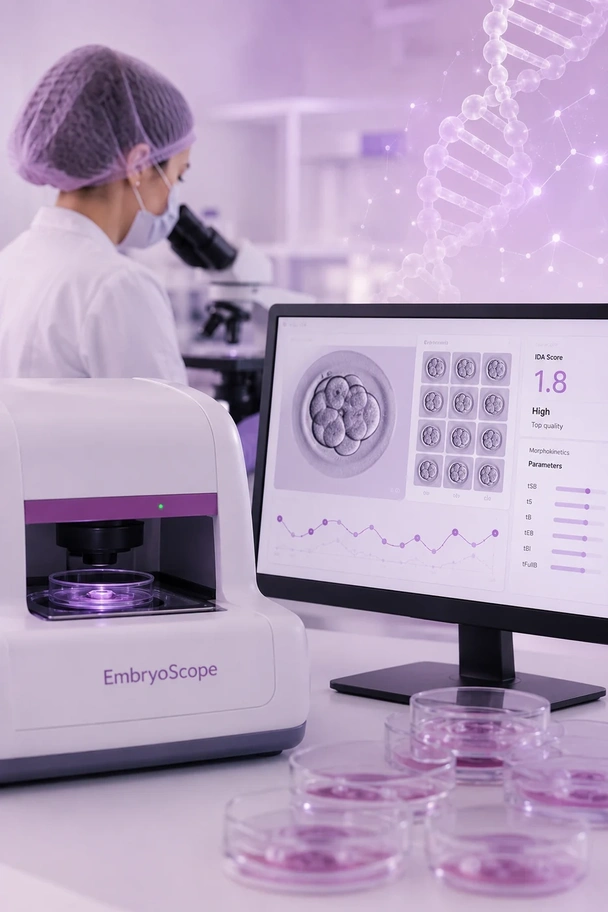
How Is PGT Performed?
- Cell biopsy is performed at the blastocyst stage of embryo development.
- A very small number of cells are removed (approximately 5 to 7 out of 100 to 150 cells).
- The sampled cells come from the trophectoderm, the structure that later contributes to placenta formation. The inner cell mass, which develops into the baby, is not affected.
- The procedure is performed with great precision by experienced embryologists according to international protocols.
- When performed according to current protocols by experienced professionals, blastocyst biopsy is considered a procedure with minimal impact on embryo developmental potential.
Embryo Selection Following Genetic Testing
- Embryos are vitrified (cryopreserved) under highly secure conditions.
- Samples are sent to the genetics laboratory.
- Based on the results, the embryo with the highest potential to achieve a successful pregnancy is selected.
Preimplantation genetic testing provides valuable information about the embryo's genetic profile; however, pregnancy success also depends on other factors.
Preparing the Uterus for Embryo Transfer
After selecting the embryo with the best genetic potential, the next step is evaluating the environment where the embryo will be transferred.
A genetically healthy embryo requires a receptive endometrium and a favorable uterine environment to implant and develop normally.
A genetically normal embryo does not guarantee pregnancy if uterine, hormonal, or immunological factors prevent implantation.
Before embryo transfer, uterine receptivity is assessed and, when necessary, additional investigations are performed to confirm that the endometrium is prepared to support implantation and pregnancy development.
These may include:
- Endometrial Receptivity Analysis (ERA). ERA may provide additional information regarding the timing of embryo transfer in selected clinical situations.
- Endometrial Microbiome Analysis (EMA). It analyzes the composition of the endometrial microbiome and may identify microorganisms associated with an altered uterine environment.
- KIR + HLA-C Testing (Immunological Compatibility Assessment). It provides information about certain maternal-embryo immunogenetic interactions, the clinical relevance of which should be assessed in the context of each individual case.
Embryo Transfer
IVF success is influenced by multiple factors, among which embryo quality and uterine receptivity are particularly important.
When both conditions are met, the likelihood of achieving an ongoing pregnancy may be more favorable.
Once a favorable uterine environment has been confirmed, the optimal timing for transferring the selected embryo is established.

Frequently Asked Questions (FAQ)
Why is genetics important in infertility investigations?
Who should undergo genetic testing?
Who determines whether I need genetic testing?
If my karyotype is normal, do I still need embryo genetic testing?
Does embryo biopsy affect embryo development?
What is the purpose of genetic evaluation?
Can I carry a genetic alteration even if I am healthy and symptom-free?
Does age affect the risk of chromosomal abnormalities?
Can PGT be performed on embryos that have already been frozen?
If I undergo PGT, will I still need testing during pregnancy?
Thank you for reaching out to us.
One of our team members will be in touch shortly through your preferred method of communication.
Contact Gynatal Clinic, the leading assisted reproduction center in Western Romania and a proud member of the FutureLife network.
We provide comprehensive infertility treatments at our Timișoara headquarters. For appointments, call 0256 240 250.
- Address: Str. Protopop George Dragomir, nr. 1, Timișoara.
- Phone (Call Center): 0256 240 250
- Email: contact@gynatal.ro